
Open
  • +971 4 354 7997
  • Info@chicagomti.com

Category Archives: Supply Chain

Optimizing Inbound Logistics for Business Efficiency

Inbound logistics, the backbone of efficient supply chain management, involves the transportation, storage, and receiving of goods into a business. This crucial process ensures that raw materials and components are procured timely and cost-effectively, supporting both office operations and production units. For manufacturing companies, inbound logistics is vital for sourcing the materials needed to produce finished goods.

Job Role: Inbound Logistics Coordinator

The Inbound Logistics Coordinator plays a critical role, ensuring the accurate and timely coordination of inbound purchase orders, systematic receiving, and final destination transfers. This role balances internal operations schedules to maintain a seamless flow of goods into the business.

Optimizing Inbound Logistics Operations

To enhance inbound logistics efficiency, businesses should:

  1. Evaluate Current Processes: Identify existing workflows and assess requirements.
  2. Maintain Supplier Relationships: Foster strong connections with suppliers to ensure reliability and quality.
  3. Address Inefficiencies: Develop strategies to mitigate bottlenecks and streamline operations.
  4. Utilize Technology: Implement a Transport Management System (TMS) for better tracking and management.

Understanding the Inbound Process

The inbound process in BPO operations involves receiving incoming customer inquiries or requests for assistance through a central hub like a call center. Inbound customer service starts when a customer contacts the company, and a representative provides assistance, answers questions, resolves issues, and may suggest new products or upgrades.

Steps in the Inbound Logistics Process

  1. Sourcing and Purchasing: Determine necessary materials or inventory and identify suppliers.
  2. Transport to Distribution Channels: Coordinate transportation to distribution centers.
  3. Notification: Inform relevant parties about incoming shipments.
  4. Arrival of Goods: Receive goods at the designated location.
  5. Receiving: Systematically check and store received goods.
  6. Reverse Logistics: Manage returns or recycling of products and materials.

Challenges in Inbound Logistics

Inbound logistics faces several challenges, including:

  • Information Asymmetry: Lack of transparency in goods movement leading to inefficiencies.
  • Demand Fluctuations: Constant changes in demand patterns.
  • Storage Constraints: Limited storage space impacting smooth logistics flow.

Inbound Strategy and Marketing

Inbound marketing is a strategy that attracts customers by creating valuable content and experiences tailored to their needs. Unlike traditional advertising, inbound marketing focuses on content creation and information sharing to reach potential customers.

Purpose and Examples of Inbound Logistics

Inbound logistics is essential for ensuring that materials and goods are efficiently ordered, received, stored, transported, and managed. For example, in manufacturing, this involves receiving and storing raw materials such as metals and plastics needed for production.

In conclusion, optimizing inbound logistics is crucial for enhancing supply chain efficiency and supporting overall business operations. By evaluating current processes, fostering supplier relationships, addressing inefficiencies, and leveraging technology, companies can streamline their inbound logistics for better performance and cost savings.
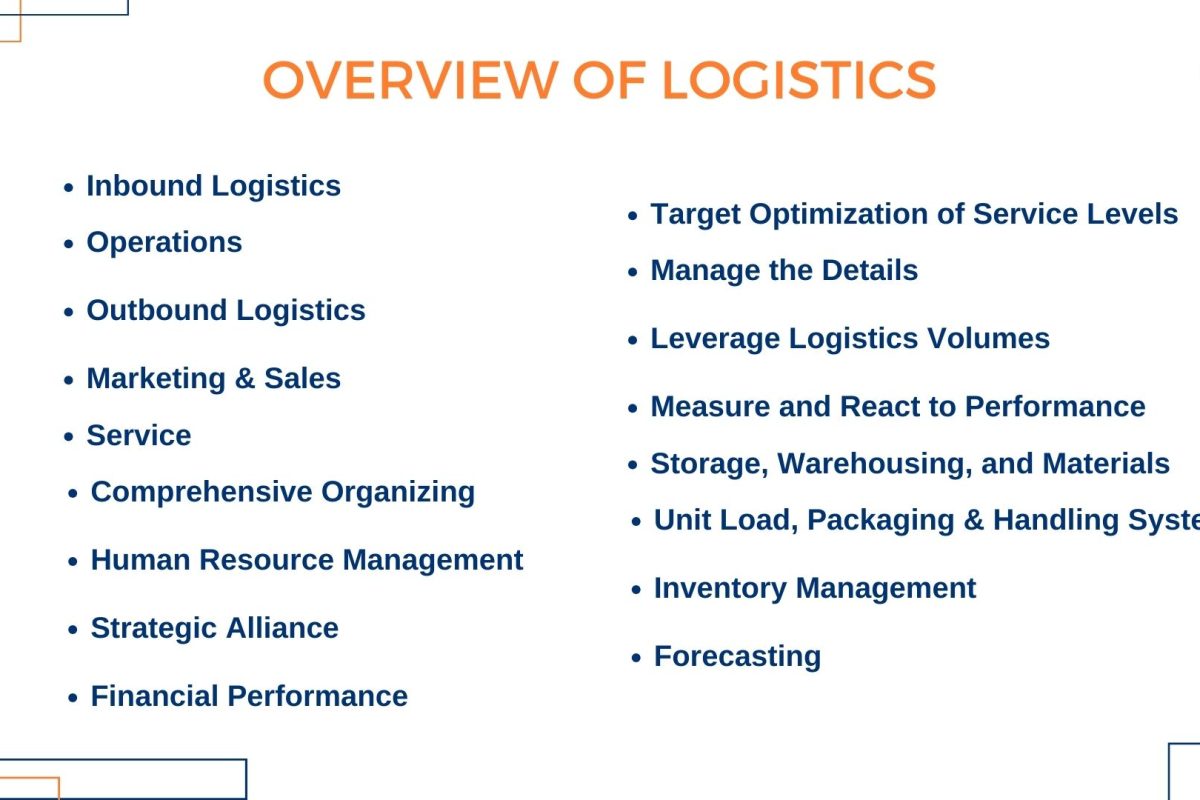
Comprehensive Overview of Logistics

Logistics is the backbone of any successful operation, encompassing a wide range of activities aimed at optimizing the flow of goods and services. Here, we delve into the various facets of logistics, highlighting their roles and significance.

1. Inbound Logistics

Inbound logistics involves the efficient handling of raw materials and components from suppliers to manufacturing facilities. This includes activities such as receiving, warehousing, and inventory control to ensure that materials are available when needed, minimizing downtime and optimizing production schedules.

2. Operations

Operations cover the transformation of raw materials into finished products. This stage focuses on the processes involved in manufacturing, ensuring efficiency, quality control, and cost-effectiveness to meet market demands.

3. Outbound Logistics

Outbound logistics deals with the distribution of finished products from manufacturing plants to the end consumers. Key activities include order fulfillment, warehousing, transportation, and distribution management, ensuring timely and accurate delivery.

4. Marketing & Sales

Marketing and sales activities aim to promote products and drive sales. Effective logistics supports these functions by ensuring product availability, managing promotional materials, and optimizing distribution channels to meet customer demands.

5. Service

Service logistics focuses on the post-sale support provided to customers. This includes maintenance, repairs, and returns management, ensuring customer satisfaction and loyalty through efficient service delivery.

6. Comprehensive Organizing

Comprehensive organizing involves the strategic planning and coordination of all logistics activities. This ensures alignment with business goals, optimizing resources, and streamlining processes for maximum efficiency and effectiveness.

7. Human Resource Management

Human resource management in logistics entails recruiting, training, and retaining skilled personnel. It focuses on developing a capable workforce to manage logistics operations effectively, enhancing productivity and innovation.

8. Strategic Alliance

Forming strategic alliances with suppliers, distributors, and logistics providers is crucial for optimizing supply chain efficiency. These partnerships enable resource sharing, cost reduction, and improved service delivery.

9. Financial Performance

Financial performance in logistics is measured by cost control, revenue generation, and profitability. Effective logistics management ensures cost efficiency, reducing operational expenses and enhancing overall financial health.

10. Target Optimization of Service Levels

Optimizing service levels involves meeting customer expectations in terms of delivery time, product quality, and service reliability. This requires continuous monitoring and improvement of logistics processes to achieve high service standards.

11. Manage the Details

Attention to detail is critical in logistics. This involves meticulous planning, execution, and monitoring of logistics activities to ensure accuracy, reduce errors, and enhance operational efficiency.

12. Leverage Logistics Volumes

Leveraging logistics volumes entails optimizing the transportation and storage of goods to maximize economies of scale. This results in cost savings and improved resource utilization.

13. Measure and React to Performance

Measuring and reacting to performance involves using key performance indicators (KPIs) to monitor logistics activities. This enables timely adjustments and improvements, ensuring that logistics operations align with business objectives.

14. Storage, Warehousing, and Materials

Effective storage, warehousing, and materials management are essential for maintaining inventory accuracy and availability. This involves optimizing warehouse layouts, managing stock levels, and ensuring efficient material handling.

15. Unit Load, Packaging & Handling Systems

Unit load, packaging, and handling systems are designed to protect products during transportation and storage. Efficient packaging and handling systems reduce damage, improve load stability, and enhance operational efficiency.

16. Inventory Management

Inventory management focuses on maintaining optimal stock levels to meet customer demand while minimizing holding costs. This involves accurate forecasting, inventory tracking, and replenishment strategies.

17. Forecasting

Forecasting in logistics involves predicting future demand to align supply chain activities accordingly. Accurate forecasting helps in planning production, managing inventory, and ensuring timely delivery to meet market needs.

In conclusion, logistics encompasses a wide array of activities crucial for the seamless flow of goods and services. By integrating and optimizing these functions, businesses can achieve enhanced efficiency, cost-effectiveness, and customer satisfaction.

Accelerate Your Supply Chain Career: Enroll in 1 Program, Get 5 International(UK) Certifications!

Certification Programs From IOSCM® – UK:

  1. CLS® Certified Logistics Specialist: Master logistics services, transportation, and policies to optimize supply chain operations.
  2. COM® Certified Operation Manager (Level 3): Enhance operational efficiency, lean practices, and supply chain performance measurement.
  3. CPS® Certified Procurement Specialist: Gain expertise in sourcing, negotiations, and contract management for effective procurement.
  4. CSCPIM® Certified Supply Chain Process Improvement Manager: Learn business improvement techniques and communication strategies for process enhancement.
  5. CWIM®– Certified Warehouse and Inventory Manager Program: Acquire skills in warehouse management, safety, and contingency planning.

What we offer:

CLS® Certified Logistics Specialist:

  • Master logistics services, including procurement, distribution, and reverse logistics.
  • Gain expertise in transportation modes such as rail, sea, road, and air.
  • Understand policies and regulations governing logistics, ensuring compliance and efficiency.
  • Enhance organizational capabilities in inbound and outbound logistics, optimizing supply chain performance.
  • Acquire tools and techniques for risk assessment, environmental sustainability, and stakeholder management in logistics operations.

COM® Certified Operation Manager (Level 3):

  • Develop skills in supply chain planning, demand forecasting, and inventory management.
  • Implement lean principles and operational best practices to drive efficiency and productivity.
  • Learn to integrate supply chain components, streamline processes, and mitigate operational risks.
  • Utilize performance measurement tools like Balanced Scorecard and Lean methodologies for continuous improvement.
  • Enhance organizational competitiveness and profitability through optimized supply chain operations.

CPS® Certified Procurement Specialist:

  • Gain expertise in strategic sourcing, supplier management, and contract negotiations.
  • Develop a deep understanding of procurement processes, from market assessment to contract development.
  • Acquire skills in risk management, compliance, and ethical procurement practices.
  • Optimize procurement operations to achieve cost savings, supply chain resilience, and stakeholder satisfaction.
  • Enhance organizational competitiveness and foster strategic supplier relationships for long-term success.

CSCPIM® Certified Supply Chain Process Improvement Manager:

  • Learn business improvement techniques such as Lean, Six Sigma, and Kaizen for process optimization.
  • Develop communication and change management skills to drive process improvement initiatives.
  • Implement continuous improvement methodologies to enhance operational efficiency and quality.
  • Identify and prioritize improvement opportunities across the supply chain, from procurement to distribution.
  • Foster a culture of innovation and continuous learning, positioning your organization for sustained success in a dynamic business environment.

CWIM®– Certified Warehouse and Inventory Manager Program:

  • Acquire knowledge and skills in warehouse layout design, inventory management, and material handling.
  • Ensure workplace safety and compliance with relevant regulations, reducing the risk of accidents and injuries.
  • Optimize warehouse operations through efficient storage solutions, picking strategies, and inventory control.
  • Develop contingency plans for risk management and business continuity, safeguarding warehouse operations.
  • Enhance supply chain agility and responsiveness, improving customer satisfaction and profitability.

Overall, these programs offer a comprehensive skill set that empowers professionals to excel in various aspects of supply chain management, from logistics and procurement to warehouse operations and process improvement. By earning these certifications, individuals can enhance their career prospects, contribute to organizational success, and make a meaningful impact in the global supply chain industry.

Maximizing the Potential of POSM Logistics: Enhancing Your Sales Strategy

In the intricate dance of retail, where every square inch of space holds potential for profit, Point of Sales Materials (POSM) logistics emerges as a strategic cornerstone. Defined as the process of storing, picking, and transporting a diverse array of sales and marketing support materials, POSM logistics represents the art of capturing attention and driving purchase decisions at the critical moment of sale.

Understanding POS Materials

At its essence, POS materials serve as specialized advertising media designed to captivate consumers directly at the point of sale. From traditional flyers and brochures to eye-catching posters and billboards, the possibilities are as diverse as they are impactful. These materials are not intended for direct sale to customers but rather serve as persuasive tools to influence purchasing behavior and enhance brand visibility.

Exploring the Role of POSM in Logistics

Within the realm of logistics, POSM plays a pivotal role in the seamless orchestration of the retail experience. Acting as ambassadors for products and services, POS materials are strategically positioned to grab attention, convey key messaging, and differentiate offerings from competitors. From free-standing displays to promotional ‘dump bins,’ each element is meticulously curated to maximize impact and drive sales.

Types of POS Materials

The spectrum of POS materials is as vast as it is versatile, catering to a myriad of marketing objectives and retail environments. Materials intended for the counter, shelf, ceiling, and floor each serve unique functions, from dispensers and wobblers to flags and floor stickers. Whether enhancing product visibility or creating immersive brand experiences, every element is meticulously crafted to leave a lasting impression on consumers.

The Essence of POSM Logistics

POSM logistics represents the intricate dance between creativity and efficiency, where the art of persuasion meets the science of supply chain management. From storage and picking to transportation and deployment, every step is meticulously choreographed to ensure seamless execution and maximum impact. Leveraging automation, advanced technology, and streamlined processes, logistics operators elevate the art of retail execution to new heights.

Conclusion

In the fast-paced world of retail, where every interaction counts, POSM logistics stands as a beacon of innovation and strategic prowess. By harnessing the power of compelling visuals, targeted messaging, and seamless execution, brands can captivate consumers, drive purchase decisions, and ultimately, propel growth in an ever-evolving marketplace.

error: Content is protected !!